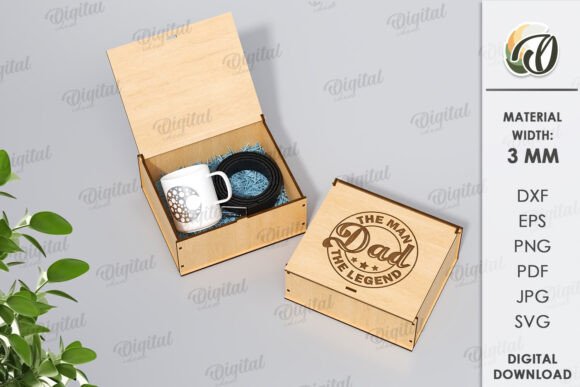
3D Father’s Day Gift Box: Laser Cutting for Father S Day Branding
As a brand designer who has spent years helping local businesses refine their visual identity, I approach every new graphic design asset with a mix of curiosity and skepticism. When I first encountered the 3D Father’s Day Gift Box, my initial reaction was not just about its aesthetic appeal, but about its practical utility in real-world commercial applications. This is not merely a decorative image; it is a structural concept that speaks to craftsmanship, care, and celebration. For small business owners, boutique retailers, and creative entrepreneurs, understanding how to leverage such a design asset can mean the difference between a forgettable product and a memorable brand experience.
The moment you look at this asset, it conveys a sense of premium quality and thoughtful preparation. The 3D rendering suggests depth and tangibility, which is crucial when marketing physical goods like handmade soaps, artisanal chocolates, or curated gift sets. It creates a mood that is both festive and sophisticated. It does not feel cheap or overly playful; rather, it feels established and trustworthy. This makes it an excellent candidate for small business branding where the goal is to elevate perceived value without resorting to cliché imagery. Whether you are running a local bakery, a skincare line, or a home decor shop, this asset helps bridge the gap between digital presentation and physical reality.
Elevating Packaging Design and Product Labels
In the world of retail, packaging is often the first point of contact between your brand and your customer. The 3D Father’s Day Gift Box offers a versatile template for enhancing packaging design. Imagine applying this structure to your own product lines. By using this as a reference for die-cut templates or laser cutting files, you can create unique unboxing experiences that encourage social media sharing. The asset provides a clear visual hierarchy, guiding the eye toward the product inside while framing it within a context of gifting and appreciation.
For businesses selling seasonal items, this asset is particularly valuable. It supports the creation of cohesive product labels and hang tags. You can extract elements from the 3D render to use as borders or background textures on your packaging materials. This ensures that your brand identity remains consistent across all touchpoints, from the box itself to the thank-you card tucked inside. A well-designed package does more than protect a product; it tells a story. This asset helps tell the story of care, precision, and attention to detail—qualities that customers associate with high-quality local businesses.
Strategic Use in Marketing Visuals and Social Media
Beyond physical packaging, this asset has significant potential in marketing visuals and social media graphics. In today’s digital-first economy, your online presence must reflect the same quality as your physical products. Using the 3D Father’s Day Gift Box in your promotional ads or website banners can instantly communicate the theme of your campaign. It serves as a powerful hero graphic that captures attention in a crowded feed.
Consider how this asset can be integrated into your content strategy. You might use it to create a series of posts highlighting different gift combinations. For example, a coffee shop could pair a bag of beans with a custom mug, presenting them within the context of this gift box structure. This technique, known as creating a product mockup, allows you to showcase your offerings in an aspirational way without needing expensive photoshoots for every variation. It adds a layer of professionalism to your editorial design efforts, making your brand appear more polished and established.
Technical Considerations for Commercial Design
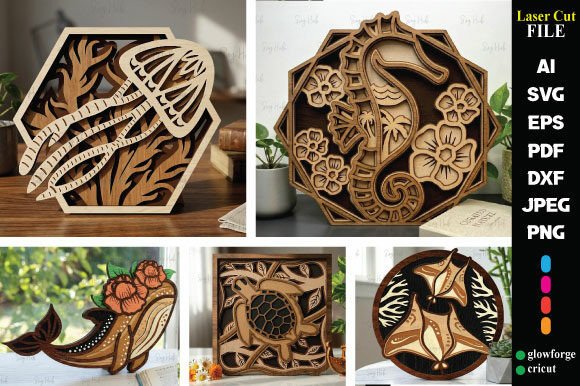
From a technical standpoint, the availability of this asset in multiple formats, including SVG and DXF, opens up exciting possibilities for Laser Cutting projects. If you run a handmade business that produces physical goods, having vector files means you can adapt the design to fit various material sizes and shapes. However, it is crucial to remember that this is a digital product. The photos are intended only for inspiration, and you receive a zip folder with design files, not a physical box. This distinction is vital for setting accurate expectations with your customers and ensuring you understand the scope of what you are purchasing.
Before integrating this asset into your workflow, there are several practical steps every designer should take. First, test the asset on real packaging mockups. How does it look when printed on cardboard versus glossy paper? Second, check its usage in black and white. Sometimes, color masks structural flaws, so ensuring the design holds up in monochrome is a good indicator of its strength. Third, preview it on small labels. Complex 3D details may lose clarity at very small scales, so you may need to simplify or isolate specific elements for use on product labels.
Additionally, inspect the SVG or vector editability. Can you easily change the colors to match your brand palette? Does the file structure allow for clean edits? These factors determine how much time you will save during the production phase. Also, consider how the asset pairs with typography. Test it beside serif fonts for a classic look, sans-serif fonts for modernity, and script fonts for a personal touch. Finding the right typographic balance enhances the overall visual hierarchy of your design.
Where to Exercise Caution
While this asset is versatile, it is not suitable for every brand context. It should be used carefully in formal corporate branding where a more minimalist or abstract approach might be preferred. It is also less effective for very small labels where intricate details become illegible. Avoid placing it in crowded product packaging layouts where it might compete with essential information such as ingredients, legal disclaimers, or nutritional facts. In these cases, simplicity is key, and a heavy graphical element can distract from the core message.
Furthermore, be mindful of low-contrast backgrounds. The 3D effect relies on shadows and highlights to convey depth. If placed against a busy or similarly toned background, the asset may flatten out and lose its impact. For luxury minimalist brands, this asset might feel too decorative. In such cases, extracting subtle geometric lines from the design might be a more appropriate adaptation.
Final Thoughts on Brand Presentation
Ultimately, the value of the 3D Father’s Day Gift Box lies in its ability to enhance customer trust and emotional connection. When customers see a thoughtfully designed package or a cohesive set of marketing visuals, they perceive your business as more professional and reliable. This asset supports that perception by providing a high-quality, ready-to-use foundation for your creative projects.
Whether you are a seasoned brand designer or a small business owner managing your own commercial design needs, incorporating assets like this into your toolkit can streamline your workflow and elevate your output. Just ensure you review the commercial license terms before using it for client work or physical product sales. With careful planning and strategic application, the 3D Father’s Day Gift Box can become a cornerstone of your seasonal branding strategy, helping you stand out in a competitive market and connect more deeply with your audience.