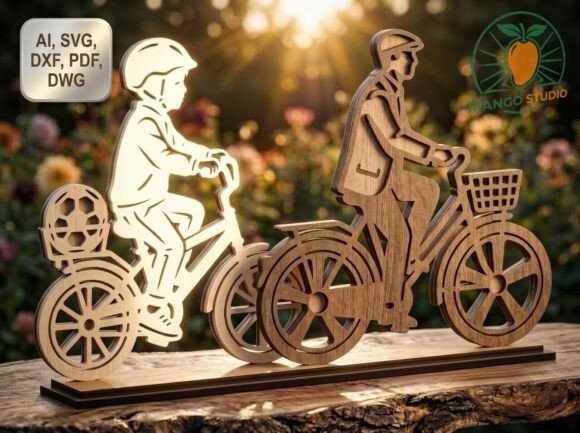
3D Father and Child Bicycle Laser Cut
When I sit down to evaluate a new machine embroidery design, I am rarely looking for just another pretty picture. I am looking for viability. I need to know if this file will hold up in a production run, if it translates well from screen to fabric, and most importantly, if the end customer will feel that immediate emotional connection that drives sales. Today, I am putting 3D Father and Child Bicycle Laser Cut under the microscope. This is not just a decorative element; it is a narrative piece built on a foundation of precision laser cutting techniques adapted for textile arts.
The premise here is simple but potent: a silhouette of a father and child on a bike ride. In my experience, family-oriented themes are evergreen, but they require exceptional execution to avoid looking cheesy or dated. This design leans into the "premium" aspect by utilizing multilayered construction. It promises depth, dimension, and a tactile quality that flat satin stitches often struggle to achieve alone. Let us look at how this embroidery file performs when we move it out of the digital preview window and onto real materials.
The First Impression: Mood and Visual Weight
Visually, 3D Father and Child Bicycle Laser Cut strikes a balance between whimsy and sophistication. The silhouette approach is smart because it abstracts the figures, allowing the viewer to project their own memories onto the image. Whether you are designing for a newborn nursery or a father’s birthday gift, the shape reads clearly even at a distance. The bicycle motif adds a dynamic line to the composition, guiding the eye across the hoop and creating a sense of motion that static portraits lack.
What stands out immediately is the potential for texture. Because this is described as a premium multilayered design, it suggests that the final product will have physical layers rather than just visual ones. For a handmade product seller, this means higher perceived value. Customers can see and feel the difference between a single-layer applique and a complex, multi-tiered assembly. It feels less like a sticker slapped on a shirt and more like a crafted artifact. This distinction is crucial for Etsy sellers and boutique owners who compete on quality rather than price alone.
Real-World Application: From Tote Bags to Nursery Decor
I have spent years testing designs on everything from heavy canvas to delicate jersey knits. Here is where I see 3D Father and Child Bicycle Laser Cut shining brightest in actual commercial scenarios.
- Custom Apparel and Sweatshirts: Imagine this design centered on the back of a heavyweight cotton sweatshirt. The contrast between the soft fleece interior and the structured, layered exterior of the embroidery creates a luxurious hand-feel. It works exceptionally well as a sweatshirt embroidery piece for Father’s Day gifts. The design’s width allows it to dominate the garment without overwhelming it, making it a statement piece.
- Baby Items and Nursery Decor: The theme is inherently gentle. When applied to a muslin blanket or a crib bumper, the laser-cut edges (simulated or actual) provide a clean, modern aesthetic that fits contemporary nursery trends. It serves as a perfect baby embroidery keepsake, marking the early days of fatherhood with grace.
- Tote Bags and Aprons: For the tote bag design market, durability is key. If this design utilizes sturdy threads and dense stitching in critical stress points, it holds up well to daily use. An apron featuring this imagery adds a personal touch to kitchen spaces, making it an ideal personalized gift for dads who enjoy cooking.
- Embellished Patches and Caps: While caps present a curved surface challenge, a smaller version of this design could work beautifully as an embroidered patch on a denim jacket or a baseball cap. The bicycle wheel offers a circular focal point that mirrors the curve of a hat crown.
In each of these applications, the design elevates the finished product. It transforms a basic commodity into a memorable item. Buyers are not just purchasing a shirt; they are purchasing a memory captured in thread and fabric.
Technical Considerations and Stitch Performance
As a designer, I must address the mechanics. A multilayered laser cut style implies complexity. When digitizing or interpreting such a design, stitch density becomes a primary concern. If the layers are too thick, the fabric may pucker or distort, especially on lighter materials. I strongly advise checking the stitch density before committing to a full production run.
Furthermore, the choice of thread colors will make or break this design. Silhouettes rely heavily on contrast. On dark fabrics, light metallic or pastel threads will pop, but you must ensure the underlying fill stitches are dense enough to prevent the base color from showing through. Conversely, on light fabrics, darker threads provide definition, but you must watch for shadowing effects if the layers are stacked closely.
Stabilizer selection is non-negotiable here. Given the likely weight of multiple layers, a cut-away stabilizer is often safer than a tear-away, particularly for garments that will undergo frequent washing. You want the structure to remain intact over time, maintaining that high-end look that justifies a premium price point.
Where to Use Caution
No design is universally perfect, and 3D Father and Child Bicycle Laser Cut has specific constraints you must respect.
- Small Hoop Sizes: Attempting to cram this detailed silhouette into a tiny 4x4 hoop may result in lost detail. The curves of the bicycle wheels and the separation between the father and child might merge into indistinguishable blobs. Ensure your hoop size accommodates the full width of the design to preserve clarity.
- Stretchy or Thin Fabrics: As mentioned, weight matters. On thin t-shirts or stretchy athletic wear, the bulk of a multilayered design can cause discomfort or distortion. Test on scrap pieces of your target fabric first.
- Dense Stitch Areas: Avoid placing this design over seams, pockets, or existing heavy embroidery. The added thickness can create uncomfortable lumps and may cause needle breaks during the stitching process.
- Frequent Washing: If the finished item is intended for everyday wear, such as a work apron or a child’s play clothes, consider the longevity of the threads. Silk or rayon threads may shine beautifully initially but can degrade faster than polyester in high-wash environments.
Design Notes for the Professional Creator
To get the best results from this digital embroidery file, follow these practical steps:
- Mockup Testing: Before stitching, view the design in black and white. This helps you assess the balance of positive and negative space. Does the bicycle frame read clearly? Is the figure separation distinct?
- Contrast Checks: Place your chosen thread colors against the fabric swatch in natural light. Screen colors can be deceiving. Ensure there is sufficient contrast for the silhouette to stand out.
- Licensing Verification: Always confirm the licensing terms. Are you allowed to sell the finished physical items? Can you include this in a digital bundle? Clarity here protects your craft business from legal issues.
- Layer Inspection: If the file includes separate layers for applique or background elements, inspect them individually. Ensure that no overlapping areas create unintended gaps or excessive bulk.
Ultimately, 3D Father and Child Bicycle Laser Cut is a strong contender for designers looking to add emotional depth to their collections. It bridges the gap between traditional applique design techniques and modern, graphic sensibilities. By paying attention to fabric choice, stabilization, and thread contrast, you can turn this file into a standout commercial embroidery asset that resonates with customers long after the purchase.
Whether you are creating a one-off personalized gift for a loved one or building a catalog of small shop products for the upcoming holiday season, this design offers the versatility and visual appeal needed to succeed. Just remember: the magic is in the details, and those details start with careful preparation and honest testing.