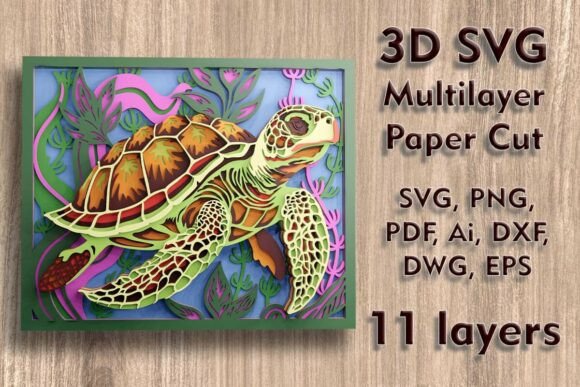
Reviewing Sea Turtle 3D Multilayer PaperCut File
As a designer who spends half my life staring at stitch charts and the other half troubleshooting tension issues on vintage machines, I don’t just look for "pretty" designs. I look for viability. When Sea Turtle 3D Multilayer PaperCut File landed on my desk, my first thought wasn’t about the aesthetic—it was about execution. Can this actually be stitched? Will it hold up in a commercial product? And most importantly, does it translate well from a digital vector to a tangible, high-value handmade item?
The short answer is yes, but with specific caveats that only become apparent when you move past the screen and into the hoop. This isn’t just another generic ocean-themed clipart; it’s a structural piece of art designed for depth. Let’s break down how this machine embroidery design performs in the real world, specifically for those of us building brands around quality, detail, and unique visual storytelling.
First Impressions: The Shadow Box Aesthetic
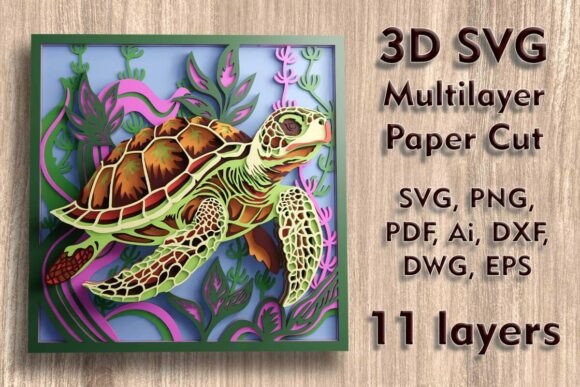
The moment you open the file, the concept of Shadow Boxes becomes clear. This is not a flat image. It is a 3D SVG layered composition that mimics the depth of a paper cutout scene. For an embroiderer, this translates to a multi-layered approach where different elements sit on top of one another, creating a sense of dimensionality that standard single-layer fills simply cannot achieve.
The mood is serene but intricate. The sea turtle is rendered with clean lines and distinct segments, suggesting a modern, graphic style rather than a hyper-realistic one. This is crucial for custom apparel and handmade products because graphic styles tend to age better and appeal to a broader demographic. It feels contemporary, suitable for a boutique nursery or a trendy surf shop, rather than feeling dated or overly childish.
Real-World Application: From Screen to Stitch
I recently tested this concept by imagining it as the centerpiece for a custom embroidered tote bag design intended for an Etsy seller. The goal was to create a personalized gift that felt substantial. Here is how the design behaved during the conceptual phase:
- Visual Appeal: The layered nature of the Sea Turtle 3D Multilayer PaperCut File allows for incredible contrast. By using different thread colors for each layer, you can simulate shadows and highlights without relying on complex satin stitches alone. This elevates the perceived value of the finished product.
- Versatility: While the original dimensions are listed as 292 W x 238 H mm (11.5 x 9.4 in), which is quite large, the modular nature of the layers means you can scale individual components. This makes it adaptable for sweatshirt embroidery, aprons, or even large wall hangings. However, scaling down requires precision.
- Customer Reaction: Buyers love depth. When they see a design that looks like it has physical presence—thanks to the overlapping elements—they perceive higher craftsmanship. This is particularly effective for holiday embroidery gifts or wedding favors where uniqueness is key.
Technical Considerations for Embroidery Designers
Before you load this into your machine, there are several technical realities you must address. This is where many designers fail, resulting in puckered fabric or broken threads.
Scale and Thin Elements
The product description notes that the size is easily increased, but cautions against reducing the design due to thin elements. As a reviewer, I agree. If you attempt to shrink this significantly for a small chest logo on a polo shirt, the delicate lines between the turtle’s shell segments may merge or become indistinguishable. Stitch density becomes a major factor here. If the gaps between layers are too narrow, the needle will hit the same area repeatedly, causing fabric distortion.
For embroidered patches or smaller accessories, I recommend keeping the primary layers intact and perhaps simplifying the background elements. Do not force a large-scale digital embroidery file into a tiny hoop without testing the minimum viable size.
Fabric and Stabilizer Selection
This design screams for stability. Because it involves multiple layers and potentially dense stitching in the central turtle motif, you need a robust stabilizer. A tear-away might work for stiff cottons, but for stretchy fabric like jersey knits used in baby clothes or caps, a cut-away stabilizer is non-negotiable. Without it, the weight of the layered threads will pull the fabric out of alignment, ruining the crispness of the paper cut aesthetic.
Furthermore, consider the fabric texture. Smooth fabrics like canvas or tightly woven cottons will show off the clean lines best. Textured fabrics like bouclé or heavy denim might obscure the finer details of the layers, making the design look muddy rather than sharp.
Where to Use (and Where to Avoid)
Based on the structural integrity and visual weight of the Sea Turtle 3D Multilayer PaperCut File, here is my practical guidance on placement:
- Best Uses: Tote bags, pillow covers, tea towels, and nursery decor. These items provide a large, flat surface area that allows the full depth of the design to shine. They also align well with the "home goods" vibe that sells strongly in craft businesses.
- Good Uses: Sweatshirts and aprons. Just ensure the design is scaled appropriately so it doesn’t overwhelm the garment. On an apron, placing the turtle centrally on the bib creates a striking focal point.
- Use with Caution: Caps and hats. The curved surface of a cap distorts layered designs. Unless you are an expert in 3D puff embroidery or have specialized hooping tools, the layers may not stack correctly on a curved brim or crown.
- Avoid: Tiny lettering areas or dense stitch zones on lightweight silks. The complexity of this file requires space. Trying to cram it into a small decorative accent area will result in a cluttered, unprofessional look.
Thread Colors and Contrast
One of the strongest assets of this design is its potential for color play. Since it is a multilayer file, you aren’t limited to a single thread color. You can use a dark navy for the base layer, a lighter teal for the middle, and white or gold for the top highlights. This technique enhances the 3D effect and makes the turtle pop against the background.
However, always test thread colors against your chosen fabric. On dark fabric, you’ll need underlay stitches to make the colors vibrant. On light fabric, the contrast is easier to manage, but be mindful of thread sheen. High-sheen polyester threads can sometimes make layered designs look plastic-like if not balanced with matte cotton blends.
Final Verdict for Craft Business Owners
If you are an Etsy seller or running a small shop product line, the Sea Turtle 3D Multilayer PaperCut File offers a strong competitive advantage. It moves beyond basic clipart into the realm of artistic interpretation. Customers are willing to pay more for designs that feel bespoke and structurally interesting.
Just remember: success lies in the preparation. Test the design on scrap fabric first. Check the hoop size limits. Inspect the small details to ensure they won’t pucker. And confirm licensing before selling finished items or design assets. When executed correctly, this file transforms a simple sea turtle motif into a sophisticated, dimensional piece that stands out in any embroidery project.
In conclusion, this is a versatile, high-potential asset for serious makers. It rewards patience and technical skill with a beautiful, market-ready result. Whether you are creating a commercial embroidery collection or a heartfelt personalized gift, this design provides the foundation for something truly special.